Leak Detection
The leak flooding your ceiling tonight was usually dripping quietly for months first. Acoustic and thermal detection finds hidden leaks while they're still small repairs.
Leak detection in SchaumburgA burst pipe at midnight, a sewer line backing up on a Sunday morning, a water heater flooding the utility room — plumbing emergencies don't check the calendar, and neither do we. Schaumburg Plumbing Pros is the local call for plumbing failures that can't wait: we help you stop the damage on the phone, arrive with the parts and equipment Schaumburg homes actually need, and repair the failure at its source.
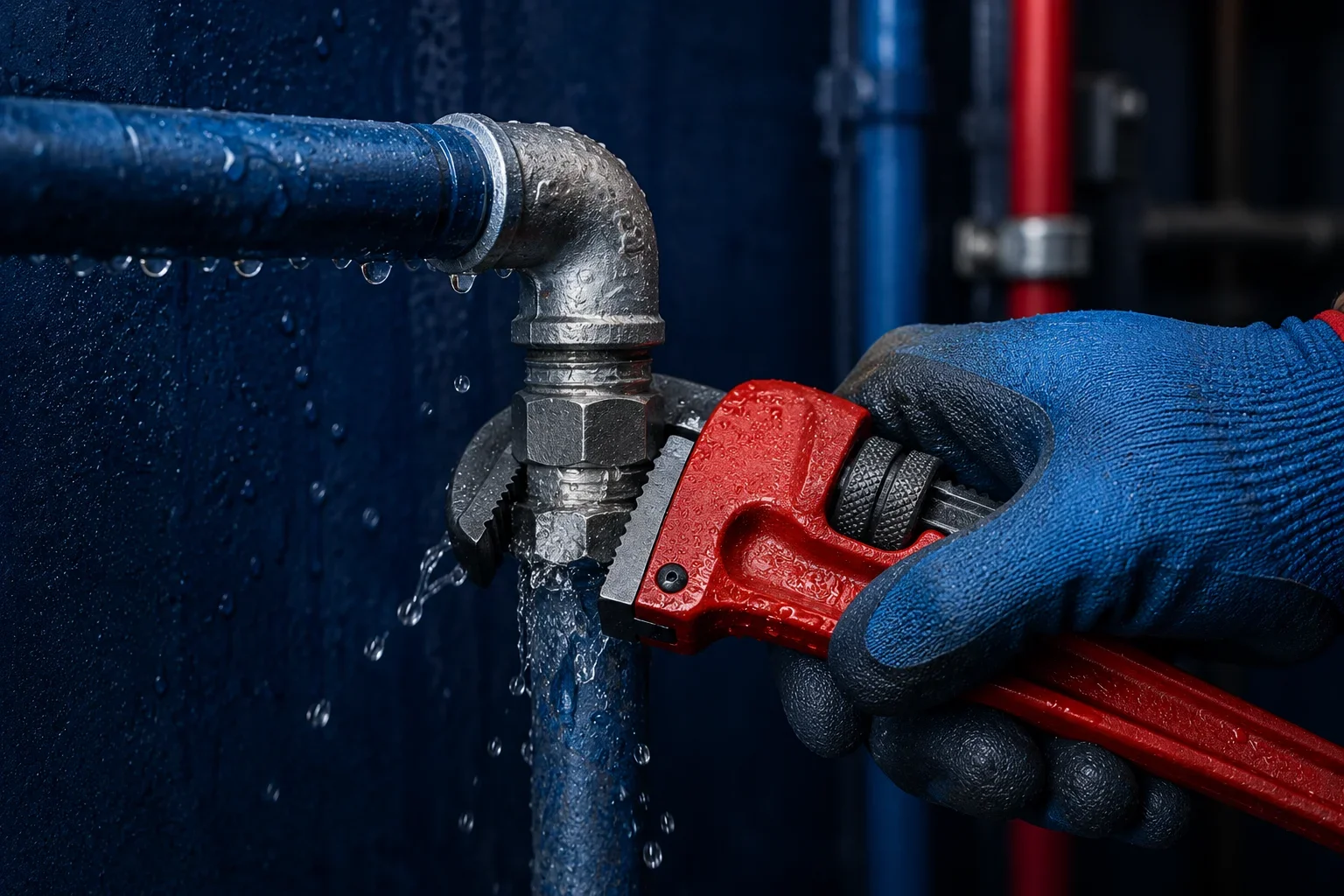
A plumbing emergency is any failure where water — or sewage — is going somewhere it shouldn't, or where waiting will make the damage worse. In a Schaumburg home, the line between "annoying" and "emergency" is usually about water volume and time: a dripping faucet wastes gallons a day, but a burst supply line can release hundreds of gallons an hour into walls, ceilings, and flooring.
The failures we treat as emergencies share one trait: they don't get better on their own, and they get more expensive by the hour. A burst pipe keeps flowing until the main valve closes. A sewer backup keeps pushing wastewater toward the lowest drains in the house every time anyone runs water. A leaking water heater keeps feeding a pressurized tank onto your floor. Even a "small" emergency like a failed sump pump becomes a flooded basement the moment the next storm rolls over Cook County.
Some situations sit on the border, and we'll always tell you honestly which side yours falls on. No hot water on a below-zero January morning with kids getting ready for school? We treat that as urgent. A toilet that runs intermittently, a slow drain, a faucet drip — those are real problems worth fixing, but they can be scheduled, and scheduling them costs you less stress than treating everything like a five-alarm fire. When you call (224) 524-0786, describe what you're seeing and we'll tell you straight: come now, or book it — and what to watch for in the meantime.
One category deserves special mention because it isn't about water damage at all: the smell of rotten eggs near a gas appliance or meter. If you ever smell gas, don't call a plumber first — leave the house and call 911 or your gas utility's emergency line from outside. Only once the utility has cleared the scene should plumbing work begin. Your safety outranks every pipe in the building.
Six failures account for nearly every urgent call we take. Here's what each one looks like from the homeowner's side — and why it can't wait.
A split pipe sprays or pours water continuously until the main is shut off. In Schaumburg's 1960s–70s housing, aging copper and corroded galvanized lines are the usual culprits, with winter freezes a close second. Every minute of flow is drywall, flooring, and belongings soaking through.
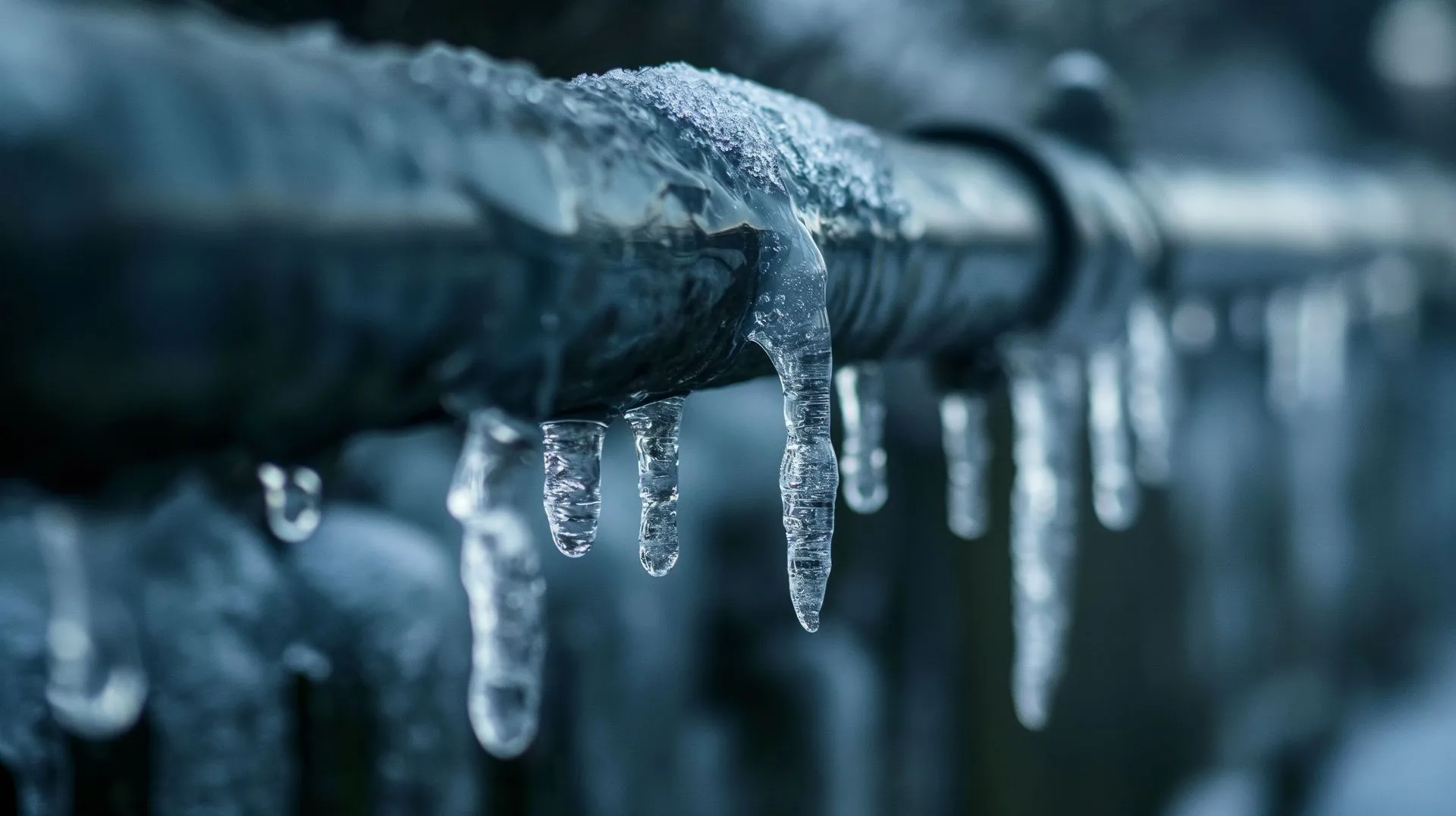
A frozen line is a burst pipe that hasn't happened yet. Ice expands inside the pipe until something gives — often at a joint, often the moment the thaw starts. If a faucet slows to a trickle during a cold snap, treat it as an emergency in progress, not a curiosity.
Water rising in a basement floor drain, a tub filling from below, or multiple drains gurgling at once means the main line is blocked and wastewater is looking for an exit — inside your house. Stop using water entirely and call; every flush makes it worse.
A tank that starts leaking rarely stops — the tank itself is failing. Pooling water at the base, rust-colored hot water, or a pressure relief valve that keeps discharging all mean the heater is at the end. Shut off its water supply and call before a drip becomes a flood.
Supply lines to toilets, ice makers, washing machines, and dishwashers fail suddenly and quietly — a braided hose lets go and runs for hours before anyone notices. If you can hear water running but can't find it, shut the main off first and investigate second.
Schaumburg's spring thaws and summer downpours push groundwater hard against foundations. A sump pump that quits mid-storm — or a pit that fills faster than the pump can move water — floods a finished basement fast. If your pit is rising and the pump is silent, call.
Ask any plumber in the northwest suburbs what their busiest weeks look like and they'll describe the same thing: the first hard freeze of the year, and every deep cold snap after it. Schaumburg's freeze season starts as early as mid-October, and by January the area routinely sees stretches where temperatures stay below zero day and night. When that kind of cold settles in, the water inside your pipes becomes the most destructive force in your house.
Here's the physics that matters: water expands about 9% as it freezes. Inside a sealed copper or PEX line, that expansion has nowhere to go. Pressure builds between the ice blockage and the nearest closed valve until the pipe wall — or a soldered joint, or an elbow — splits. Counterintuitively, the burst often isn't where the ice is; it's wherever the trapped pressure finds the weakest point, which is why a freeze in the garage can flood a bathroom wall ten feet away.
The Schaumburg homes at highest risk share recognizable traits. Houses built during the village's 1960s and 1970s boom often have supply lines running through exterior walls and unheated garage ceilings with minimal insulation by modern standards. Split-levels and ranches with plumbing over crawl spaces are vulnerable wherever cold air infiltrates. Vacant homes — a house sitting empty between owners, or a family away for a winter holiday with the thermostat set low — are the classic worst case: a pipe freezes, bursts, and runs undetected for days. If you travel in winter, shutting off the main before you leave is the single cheapest insurance you own.
Signs a pipe is frozen — before it bursts:
If you catch a freeze at the trickle stage, there's a safe way to respond: open the affected faucet slightly, and warm the pipe gradually with a hair dryer or space heater — never a torch or open flame, which can ignite framing and is a leading cause of winter house fires during thaw attempts. If you can't find the frozen section, if the pipe has already bulged or split, or if water appears anywhere it shouldn't, stop and call us at (224) 524-0786. A frozen pipe we thaw carefully costs a fraction of the burst pipe we repair after a rushed thaw — and a fraction of the water damage either way.
Prevention beats both. Before the season turns: disconnect garden hoses and shut off interior valves to outside faucets, insulate exposed lines in garages and crawl spaces, seal drafts where pipes pass through exterior walls, and keep the thermostat at a consistent temperature — including overnight — during cold snaps. Opening cabinet doors under sinks on exterior walls lets warm room air reach the pipes. These aren't glamorous tasks, but every Schaumburg winter, they are the difference between the homes we visit for a checkup and the homes we visit with a pump.
What you do in the first minutes of a plumbing emergency matters more than anything that happens afterward. Water damage is measured in gallons per minute — these four steps stop the clock.
In most Schaumburg homes, the main shut-off is in the basement or utility room where the water service line enters through the foundation wall — often near the water meter. Turn it clockwise until it stops. If only one fixture is failing, its local shut-off valve (under the sink, behind the toilet) may be enough. Not sure where your main is? Find it this week, before you need it — and if you can't, ask us to show you on any visit.
If water is pooling near outlets, appliances, your electrical panel, or a water heater, switch off the breakers for those circuits before stepping into standing water. For a leaking electric water heater, the breaker is the shut-off; for a gas unit, turn the control knob to pilot and close the gas valve on the supply line if you can do so safely. Never wade into water that may be in contact with live electricity.
Open the lowest faucets in the house to drain remaining water from the lines and relieve pressure. Move furniture, boxes, and electronics out of the water's path, and get towels and buckets working on what's already down. For a sewer backup, the rule is different: use no water at all — no flushing, no laundry, no showers — until the line is cleared.
Tell us what happened, what you've shut off, and what you're seeing now. We'll confirm the steps you've taken, flag anything else to do, and head your way with the right equipment. If the damage is extensive, take photos before cleanup — insurers ask for them, and ten phone photos now can be worth a great deal later.
Homeowners calling during an emergency are in the worst possible position to negotiate: water is flowing, stress is high, and the temptation is to say yes to the first number anyone quotes. We built our process to protect you in exactly that moment. The sequence never changes: control the water, diagnose the failure, explain the findings, quote the complete repair price, and only then — with your approval — start the repair. The diagnosis may involve shutting down and isolating sections of the system, a camera inspection of a drain or sewer line, or electronic leak detection to find a break hidden in a wall. You see what we see.
Why won't we quote a firm price over the phone? Because the honest answer to "what does a burst pipe cost?" is that it depends on what actually failed. A burst at an exposed basement joint, a split inside a finished wall, and a ruptured line under a slab are three different jobs with three different prices, and a company willing to name one figure sight-unseen is either guessing high or planning to renegotiate in your flooded kitchen. What we can promise on the phone is the process and the principle: you approve the price before the work, the price covers what we described, and if we uncover something genuinely different mid-repair, we stop and show you before anything changes.
It's also worth knowing what you're really paying to avoid. Industry restoration data is consistent on this point: the plumbing repair is usually the smallest part of a water emergency's total cost. The drywall, flooring, cabinetry, mold remediation, and ruined belongings that follow a slow response are where the real money goes — which is why the shut-off steps above, and a fast call, save more than any discount ever could. Our job is to make sure the repair itself is done once and done right, so the emergency doesn't get a sequel.
We're based in Schaumburg, and that matters during an emergency. A crew dispatched from across the metro fights traffic on the Jane Addams or I-290 before they ever reach your door; a local crew knows that the fastest route to a home near Woodfield differs from the fastest route to Weathersfield, and that an address on the DuPage County side of the village follows different landmarks than one near Olde Schaumburg Centre. When water is flowing, those minutes are not a detail.
Local knowledge also shortens the repair itself. We know which Schaumburg neighborhoods still run original clay sewer laterals that roots invade every spring, which eras of construction hide galvanized supply lines behind the walls, and which subdivisions sit on the high water tables that work sump pumps to death each thaw. That pattern recognition is why our trucks carry the fittings, pipe, and freeze-repair stock this housing stock actually calls for — the goal is always the same: diagnose it, fix it, and finish it in one visit whenever the failure allows.
The same response covers Hoffman Estates, Palatine, Elk Grove Village, Roselle, and Rolling Meadows — the suburbs that ring Schaumburg and share its housing eras, its weather, and its plumbing problems. Wherever in that ring you're calling from, the number is the same: (224) 524-0786.
The questions Schaumburg homeowners ask us mid-emergency — and on the calmer days when they're preparing for one.
Treat it as one. A frozen pipe means pressure is already building against the pipe wall, and many bursts happen during the thaw, not the freeze. Open the nearest faucet slightly to relieve pressure, warm the area gradually with a hair dryer or space heater — never an open flame — and call us at (224) 524-0786 if you can't locate the frozen section or flow doesn't return. A careful thaw now is far cheaper than a burst repair plus water damage later.
The repair conversation can sometimes wait — the water can't. If you've fully shut off the main, drained the lines, and the house is dry and safe, then yes, the situation is stable and we can talk timing honestly. If water is still flowing anywhere, or you can't find the shut-off, waiting means continuous damage: a burst supply line can release hundreds of gallons an hour. When in doubt, call and describe it; we'll tell you plainly whether it can wait.
Keep doing damage control: main water off, breakers off for wet circuits, faucets open to drain the lines, belongings moved and towels down. Take photos of the damage for insurance before you clean up. For a sewer backup, use no water at all — every flush or load of laundry adds to what's coming back. And note anything that helps us diagnose faster: when it started, which fixtures are affected, and any sounds or smells you've noticed.
We handle them — sewer emergencies are core work for us, not a referral. We start with a camera inspection to find whether the blockage is roots, a collapsed section of clay lateral, or a belly in the line, then clear or repair based on what's actually there. One warning sign to act on immediately: water or sewage rising in a basement floor drain or the lowest tub in the house. Stop all water use and call (224) 524-0786.
It depends on the failure — thawing a frozen line, replacing a burst section, excavating a sewer lateral, and swapping a failed water heater are very different jobs, so beware any company that quotes a firm total before seeing yours. Our commitment is the process: we diagnose first, give you one complete price for the repair, and start only with your approval. If something unexpected shows up mid-job, we stop, show you, and re-quote before proceeding. No work you didn't approve, ever.
Most winter emergencies are preventable with an hour of work in the fall: disconnect hoses and drain outside faucets, insulate exposed pipes in garages, crawl spaces, and exterior walls, seal drafts near plumbing, and keep heat consistent during cold snaps — including opening sink cabinets on exterior walls so warm air reaches the pipes. If you're traveling, shut off the main before you leave. And know where your main shut-off valve is today, not during the emergency.
Emergencies often start as smaller problems caught late. These services find them early.
The leak flooding your ceiling tonight was usually dripping quietly for months first. Acoustic and thermal detection finds hidden leaks while they're still small repairs.
Leak detection in SchaumburgWhen the same pipes keep failing, the emergency is a symptom. We repair the break — and give you a straight assessment of whether the rest of the system is headed the same way.
Pipe repair in SchaumburgA backup that comes back after clearing is a line problem, not a clog problem. Camera inspection shows the crack, roots, or collapse — and exactly where it is.
Sewer line repair in SchaumburgShut off the main if you can, then call. We'll guide you through the rest and get a Schaumburg plumber headed your way.
Call (224) 524-0786